Insights
The attack path nobody owns: how to reduce your attack surface without buying anything
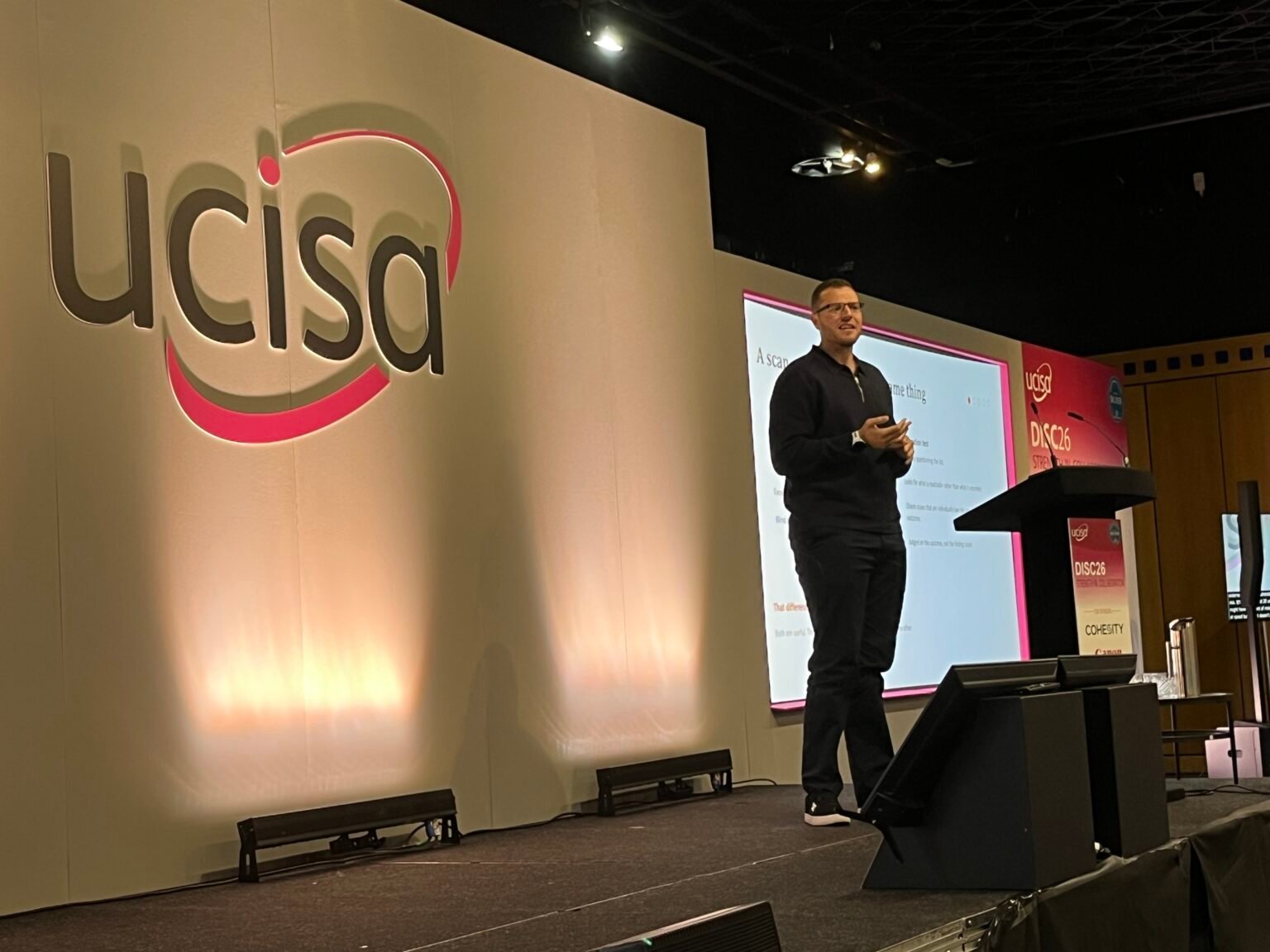
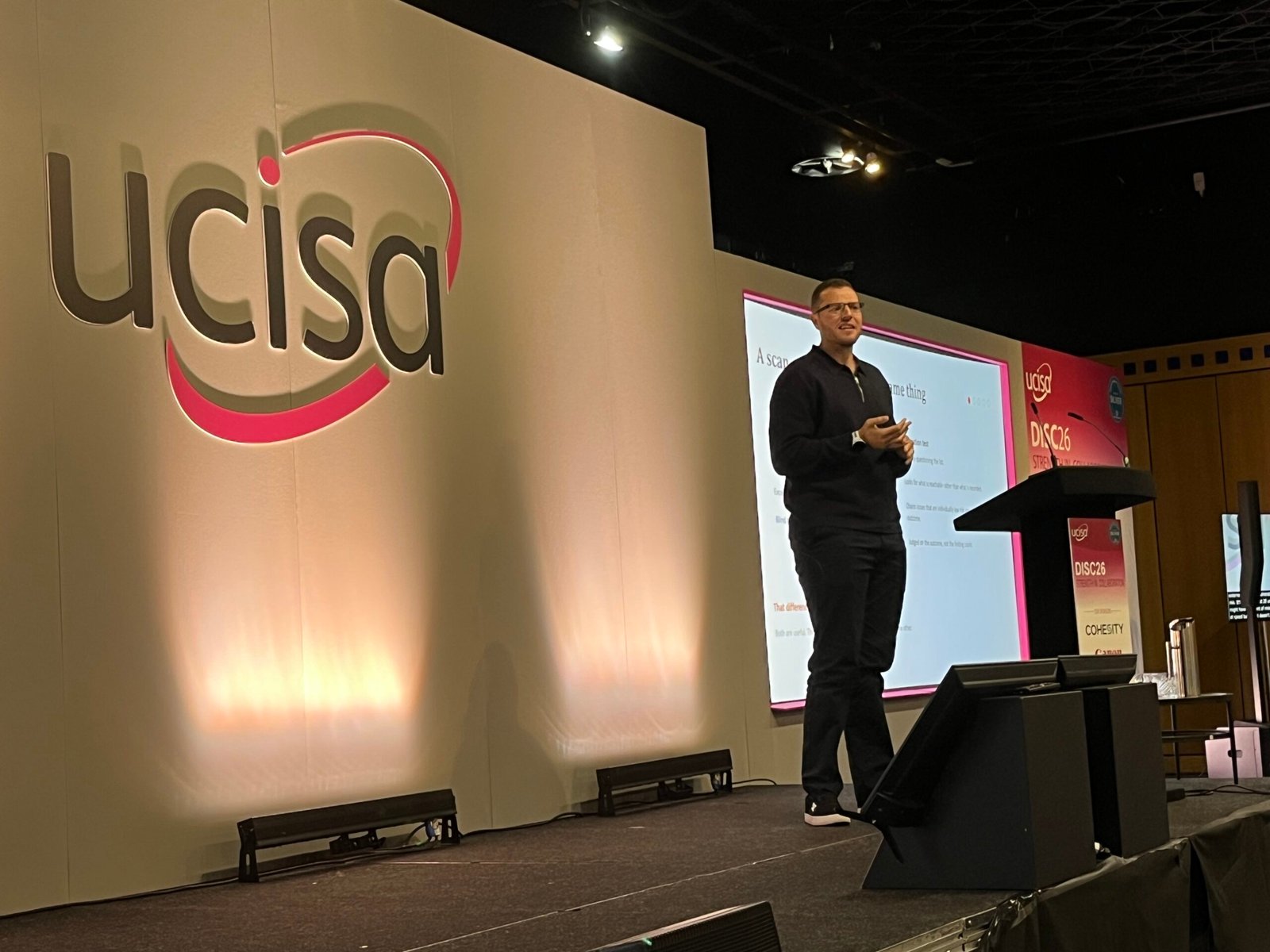
In October 2026 JAG Secure’s founder, Jordan Glover, gave the closing keynote at UCISA DISC26, the first joint conference of UCISA’s Digital Infrastructure and Security groups. The talk was called The Attack Path Nobody Owns. The conference theme was collaboration between those two teams. The talk was about what an attacker does when they don’t collaborate. It was also about what any organisation can do about it without spending money. This is the written version.
Why a scan does not find this
A vulnerability scan takes the asset list you give it and reports known issues against that list. It is quick, repeatable and good at proving patch progress. It is also blind to anything nobody declared. A penetration test starts by questioning the list. It looks for what is reachable rather than what is recorded, then chains issues that are individually low risk into one outcome that is not. If your inventory is wrong, your scan is confidently wrong. That distinction is most of what follows.
What we find before you do
Four things turn up on almost every external test we run. A project host stood up years ago, still answering, patched by nobody. A departmental subdomain commissioned directly by a team, running a web application central IT does not recognise. A firewall rule opened for a migration or a supplier with every intention of closing it afterwards. A management interface for an appliance or hypervisor, reachable from the internet because that is how it shipped. Very little of it is still needed. All of it is reachable.
JAG Secure works with universities and colleges, where this problem is structural rather than careless. Departments have historically been able to buy and build for themselves, often for good academic reasons. Infrastructure arrives on a grant cycle and the grant ends before the server does. Students cycle through in three or four years, staff move between institutions and the knowledge leaves with them. Mergers and campus changes hand teams systems they never specified. None of that is negligence. It is what twenty years of a federated estate does. Attackers do not care why it happened. The same pattern shows up in any organisation that has grown by acquisition, devolved IT to business units or outlived a few generations of staff.
Credentials you have already lost
Exposure on its own is a nuisance. Exposure plus a password is an incident.
Billions of credentials from unrelated breaches are aggregated, indexed and freely available. None of them came from you. Some of your staff have used the same password on a personal account and a work one, which is human rather than careless. Some of those accounts were never rotated, never disabled and never reviewed: leavers, contractors, service accounts, old test accounts. If anything still reachable accepts a username and password without a second factor, a small, well chosen list sprayed slowly is quiet and it works.
Exposure plus a valid password is not an exploit. It is a login. Your monitoring records a successful authentication and everything after it looks like work.
One chain, five steps
This is a composite drawn from several engagements. No single organisation is shown and no client is named.
An unowned host: a departmental web application on a subdomain no central team recognises. A valid credential: a password reused from a public breach corpus, on an account that still works. A foothold: remote access that checks the password and nothing else, with no device posture and no second factor. A certificate template: a standard domain user permitted to request a certificate and name the account it belongs to. Domain Admin: a certificate issued in a privileged account’s name, then used to authenticate as that account.
Every step is ordinary. None of it needed a zero day or a custom implant. Steps one to three took less time than the report did.
Every step had an owner. The chain did not.
The unowned host belonged to a research group, funded locally and absent from the central asset list. The reused password sat with an identity team midway through an MFA rollout. The remote access policy was built by networks, with the risk accepted somewhere else. The certificate template was configured by infrastructure years ago and nobody has reviewed it since. Every one of those was known to somebody. Several were on a risk register. What was missing was anybody holding the whole path. Silos are not a culture problem here. They are an attack path.
What the certificate template did
Your certificate authority exists to prove identity. One template allowed any authenticated user to request a certificate and specify which account it should represent. Ask for one in a privileged account’s name and the domain issues you that identity, signed by itself. It survives for three reasons. It was configured before most of the current team was in post. It works, so nothing has ever drawn attention to it. It sits between the team that owns the servers and the team that owns the risk. The fix is an afternoon of template review. No licence, no project, no budget code.
Four questions to ask each other
What is exposed? Who owns it? What is it for? What breaks if we switch it off?
Ask them jointly, infrastructure and security together, in that order, because you cannot answer the second without the first. If question two or three has no answer, question four is the interesting one.
Where to start on Monday
Build one list, jointly. Not the CMDB and the security tooling separately, but one list both teams accept, with a named owner against every entry. The cost is a recurring hour.
Look from the outside in. Enumerate your own external estate the way a tester would, from public DNS, certificate transparency logs and your own IP ranges, then compare it with the list you just built. The cost is free tooling and an afternoon.
Switch things off. Anything with no owner and no purpose gets turned off with an agreed rollback, not risk assessed for another year. The cost is a change window.
Review what predates you. Certificate templates, Group Policy, firewall rules and service accounts that nobody currently in post has ever read. The cost is an afternoon each.
None of the four needs a supplier. Two of them need each other’s calendars.
You cannot defend what nobody owns
Reducing your attack surface is mostly an inventory and ownership exercise. Know what is exposed, know what it is doing, remove what you do not need. Do that and the next test you commission will have far less to find.